Thursday, March 31, 2016

Oh the Humanity!!!

Building an effective millennium vision for the planet must contend with the elephants in the room, the currently enormous and increasing population of humans.

H. Sapiens Population Spiral?
Human overpopulation is so close to us that it is often simply dismissed out of hand.  Certainly there are issues of reproductive freedom, eco-societal pyramids and human sacredness to consider, nevertheless a reduction of the worldwide footprint that billions of people create is absolutely critical to the planning of a balanced, long-term world system.

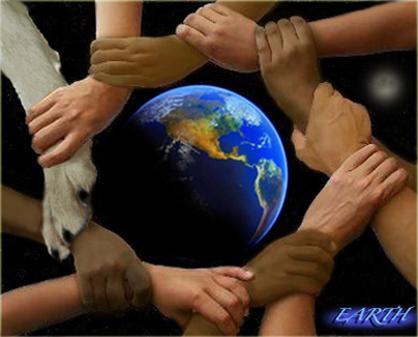
As discussed in Earth 3.1: A Planetary Upgrade, how we value the human individual and community relative to the rest of the planet's occupants and landscape is in need of adjustment.  Thought experiments that might value a single human child more than an entire species on the brink of extinction are inherently biased, if only because we humans will judge irrationally due to our evolutionary and cultural empathy toward one of our own.  Importantly, a simplistic case like this that considers people who are currently living, sidesteps the real issue, which is planning for future populations.  Reducing the human population effectively and gradually over upcoming centuries will leap over such maddening ethical quandaries landing in a space where we can create mindful and heartfelt planetary solutions.

To be sure, there are hurdles to overcome even if we are able to reforge the fundamental ethic of human value. Proscribing limited human reproduction seems tyrannical when the eugenic plans of 20th Century Germany and China cited.  Removing individual and local community agency was the ethical flaw in those plans. A milder social engineering design that engages human agency is the likeliest path to a human population solution.

Solutions that include secular sex and relationship education are the key to reducing human numbers to a manageable amount; civilization must continue its journey culturally beyond its instinctive evolutionary and mythical impetuses.  A human society that progresses will distribute widely effective contraception from contraceptive drugs and condoms to sperm valves and virtual sex alternatives. Implementing a variety of solutions not only will reduce undesired human pregnancies in the short term and human population in the long term.

When Growth Becomes Grotesque
One of the toughest problems we'll need to solve will be transitioning to a sustainable socio-economic system that can thrive in an era of reduced human population.  The pyramid style economics currently practiced which focuses on growing consumer base, per-capita consumption and chieftain style profit models will eventually fall if the value of resources, life and environment are honestly included in cost.  The wealthier castes and their nation states will cling to the old system, at least until an educated, democratized globe succeeds in adjusting those inherent values.

In the long term, the planet can support a substantial number of humans to pursue our unique cultural experiences, inclusive of a mindful exploration of the Universe.  But if we want our world to include healthy populations of other species, beautiful biomes for them to thrive in, and a sustainable planetary environment in aggregate, then human population reduction must be integral to our vision.

Friday, March 25, 2016

On the Nature of Value

If planetary progress is to be achieved some measure of overall well being needs to be made, if only to permit comparison of where things are today to where they were yesterday or yestercentury.  To this ends, determining the value of the aggregate state of the world is problematic since it blends innumerable objective and subjective aspects of Earth's environments, its inhabitants, and the cultural abstractions they project.
Beauty and Balance

Taking a step back, let's be clear just who the primary assessors of value on the planet are at the moment: humans. Or more accurately Homo Sapiens is the species who are most actively changing the world based on their ongoing evaluations. Through a combination of science, instinct, religion, pop-culture, and numerous other modes of assessment, humans and their communities reactively make value choices which change the world.

One might argue that the aggregate of Earth's natural environments, living things and dynamic systems are being continuously self-assessed and self-regulated.  This Gaia abstraction, which includes human civilization as a component part, could do no wrong as a whole simply because all outcomes are by definition "natural."  This scenario comes across as misleading or at least unuseful in the scheme of increasing aggregate well being.  In the extreme, it implies total domination and destruction of the planet by humans for humanity's sake alone would be an acceptable natural outcome.  It might be natural, but it would be unethical as a whole.

Balance and Beauty
In truth, it has become the vocation of humans to reach outside of the natural order of things to define what has higher value for ourselves and for all involved.  Over the next millennium, laws will be crafted by humans that artificially seek to construct balances within the instability of natural whim. Algorithms will be designed by humans to model stable environments, lifestyles and economic systems with the intent of defying tradition to redefine civilization. It may even come to pass that artificially intelligent constructs and expert systems will be created by humans in order to legally represent as proxies other species, natural resource reserves and biomes, all in the hopes of balancing more exquisitely the world's dynamic systems for the long term.


At the end of the day, a flexible set of values that are open to innovation and adjustment will serve the planet, inclusive of humans, best.  The ethical propositions we humans forge and follow can lead the whole world on a global journey of wonder if we persevere with humility.  The sacred value we attribute to human life and free agency may need to be scaled back here and there, alas such sacrifice may very well demonstrate the nobility of our species to take one for the global team.

(Next week Goodness First will begin to explore the specific objectives of The Millennium Plan)

Thursday, March 17, 2016

Earth 3.1: A Planetary Upgrade

Clearly, the extensive scientific investigations of the past several centuries has documented the foundational elements of the origin of matter (Earth 1.0), life (Earth 2.0) and culture (Earth 3.0). With confidence the veracity of the many origin myths that religion and pseudoscience purport to the present day can be discounted.

Go Team!
This is not to say there isn't some historic and aesthetic value in the colorful stories spelled out by origin and higher power mythologies.  Human storytelling can convey abstractions that invigorate the human psyche and the pursuits of humanity as a whole; however we need to recognize these mythical tales as the fictions they are.

It may not be easy or quick, but in time society can leave the gods, souls and afterlives of make-believe behind. However, in doing so the real problems that confront the world can be focused upon directly and more effectively. Ultimately by ratcheting up the global ethic of humanity, we can begin the long term pursuit of greater well being for the planet as a whole.

There is no doubt that humans are the Earth creatures of the moment.  As a collective species we have the largest impact on the planet alongside the greatest ability to reflect upon our actions before putting them into influential effect.  In aggregate, the mindful leveraging of human action can push Earth, on all fronts, physical, biological and cultural, into a positive next stage of development.

To this ends the articles that follow will target specific problems and propose solutions to begin the long term journey.  Spelling out details of a millennium long vision has the intention of inspiring conversation to refine long term objectives and processes which can then be implemented over time by individuals and communities worldwide.

With rationality, wisdom and empathy in our tool belts, together we can upgrade this planet toward an amazing world, a hypothetical place I deem Earth 3.1!


Thursday, March 10, 2016

Earth 3.0: In Meme We Trust!

Layered upon Earth 1.0's physical properties, Earth 2.0's biological properties delivered a planet thriving with life.  The thriving panoply of life has changed gradually over billions of years driven by natural selection within a sphere of physical circumstance.  As such, live became ever more diverse in its individual and group structure and behavior, living characteristics that were passed down via genetic programming.  At some point in the process, neurological systems in some species became complex enough to enable the communication of wisdom to the next generation external to genetics. The opening of this communication path represents the birth of memetic information exchange.

Leaping Forward With Memes
To illustrate this information exchange let's take a look at a real world example.  A cougar is a physical aggregation of molecules, each molecule stable in its own right; however if only molecular physical properties were at work (Earth 1.0), you would have a disorganized, wet pile of matter. With biological properties engaged (Earth 2.0), a variety of molecules are organized via genetic causality into cells and those cells are organized into systems which complete the form of the cougar we know; moreover, that living form has a baseline of instinctual autonomy towards regulating metabolism, acquiring food, reproducing, et al as needed to live, survive and thrive.  However, as a creature of some intelligence, the cougar has the ability to learn, and at least limitedly to pass on its acquired knowledge (Earth 3.0) in categories such as hunting technique, hiding technique and socializing technique.  This memetic transfer of knowledge is especially beneficial to its offspring, and inherently helps perpetuate the genetic line.  

Matter, Genes and Memes at Work
Importantly, these layers of physical, biological and memetic properties have overlapped over the eons in numerous ways in a multitude of living species leading to the present day.  Humans, therefore, were not the first species to share wisdom from one generation to the next using memetic information exchange, they simply have become the first to master this transfer of knowledge.  In developing knowledge seeking and sharing technology (language systems, education systems, investigation systems) the human species has been able to share learned ideas, both concrete and abstract, with high resolution to future generations.

Because of this the Earth has become a world dominated by a populous human society wielding its implementations of a myriad of memetic information systems.   Agricultural technology, medical technology, transportation technology, resource acquisition technology, economic technology, media communications technology, the list goes on an on.  Each line of memetically shared knowledge has help fuel the global explosion in human species success, currently more than seven billion strong.  Importantly, this large human population disproportionately influences the globe in numerous ways.

A Glimpse of the Viral Success of Human Meme Mastery
The survival culture of humanity has both intentionally and unintentionally targeted its own success as its primary objective. It is worth noting that ethical systems that target other objectives have been pursued in part by human subpopulations, however, these objectives have been largely secondary to the pursuit of human proliferation and human well being for all of human history.  

Earth 3.0, a planet ruled by the physical presence of living human culture, is in full effect at the moment.  I propose that Earth 3.1 lies in the relatively near future.  Over the next thousand years human ethical systems have the potential to be refined and implemented effectively on a global scale, not only for the benefit of humankind, but for the well being of the planet as a whole.  

Welcome to the launch of The Millennium Vision.

Thursday, February 18, 2016

Earth 2.0: Let There Be Life!

Microscopic Life: Survive! Replicate!
Nine billion years had passed for Earth to reach the sphericalish disposition I described in my previous article, and which I will refer to as Earth 1.0.  In short, it is incontrovertible that the Big Bang generated physical matter which digested in the fiery belly of stars was then regurgitated, reaggregated  redigested again and again  resulting in our vast universe of material complexity.

All this chemical, nuclear and physical mixing was driven by properties inherent in the matter and spatial location relative to other matter. Importantly, the subsequent organization of all this physical matter was strongly dependent upon the very nature of particles and the forces and energy exchanged between them.

About 4.5 billion years ago Earth 1.0 was transitioning toward a state of higher complexity.  One might label these new, underlying, organizing elements as biological properties.  Given yet another immensely long period of time, these properties would lead Earth down a path toward an every changing destination filled with diverse, living organisms.

Macroscopic Life: Survive! Replicate!
It is important to note that Earth 1.0 didn't leap to Earth 2.0 overnight; that would require something akin to religious magic, an unbelievable occurrence given the abundance of evidence found over centuries of research. In truth, the Earth's liquid oceans sloshed, and its gaseous atmosphere swirled; the Moon's gravitation tugged while the Sun's radiation showered upon this pebble.  And with numerous other physical inputs, at some juncture a bit of the planet's matter became complex in a biological fashion began down a new path of self organization.

Now, one might be tempted to label all the resulting intermingling as random processes; on the contrary, the biological self organization that emerged was simply a tiny bit more stable than the disorganizing forces mustered against it.  Over a very, very long period of time this process, now known as evolution by natural selection, dominated.  With extremely gradualism engaged a planetary ecosystem of living things systematically coalesced from the mix of physical matter and growing biological detritus present.

Life evolved!

These organisms competed with the physical elements and with each other through billions of sunrises and sunsets until an amazing diversity of living things spread across the planet.  It is possible life sprung from one or multiple sources, from organic molecules seeded from comet impacts, from the peripheries of active ocean volcano, or from sunlit pools of rare chemical solutions.  Regardless, the world of Earth 2.0 thrived with ever changing varieties of prions,viruses, archaebacteria, eubacteria, protists, fungi, plants and animals wherever conditions permitted.

Megascopic Life: Survive! Replicate!
Importantly each living individual had within it a new drive to replicate itself, if not perfectly, then at least sufficient to pass on information to the next generation to do essentially the same.  These genetic commands encoded in chemical DNA became ever more complex to better contend with the elements, competition from other individuals, and cooperation with other individuals if the outcome resulted in a new stable, replicating generation of its own.

In fact, Earth 2.0 has been alive now for more than four billion years, thriving continuously changing gradually, and establishing a living layer that raged to be successful biologically.  Living organisms alongside physical matter interwove ecosystems that continued if they were holistically stable, and crashed if circumstances were too destabilizing.   Some of these destabilizations were local and others resulted in global mass extinctions, nevertheless life persisted.

Terrestrial life flourished upon the physical and biologically complicated Earth hungering to replicate itself without any real conscious reflection on how to adapt for future.  Evolution's simple organizing nature was embodied by survival and replication of those organisms who inherently survived and replicated. Then about 40,000 years ago, amidst life's flourishing a unique species of life emerged. This species would usher in a new era, wielding a new organizing element with skill, the meme.

Earth 3.0, here we come!

Friday, February 12, 2016

Earth 1.0: Matter of Fact

In the beginning (plus a few billion years)
Before we start forming a vision of the future, we need to consider what has come before us. Specifically, what are the larger events that have delivered the present day.  Knowledge of this legacy will provide perspective into soluions for today's challenges.  To that ends, I will summarize in three articles the salient details of the entirety of the past.

A long time ago (13.8 billion years to be fairly precise) the universe as we know it began with a rapid expansion that resulted in the congealing of matter  (primarily Hydrogen and Helium with trace amounts of Lithium) from energy.  Suffice it to say the singularity at the center of this "Big Bang" event continues to be studied, but the preponderance of evidence points to this moment as the origin of all matter.

Now, of course, we exist in a world that is much more that those three lightweight elements (insert your favorite Periodic Table joke).  Over the course of billions of years after the Big Bang the very nature of matter drew itself together via gravity into immense clumps of sufficient mass that ignited into the self sustaining nuclear energy plants we call stars.  

Stars generally fuse lighter elements into heavier ones which generates heat and emits light aka starshine.  Give a star enough time and it will go through a variety of stages depending on its size forging the likes of Carbon and Iron at its core.  Importantly, the scores of different elements that make up the compounds on Earth were not formed in this most basic stellar fusion.

To get this panoply of atomic elements you need an exploding star, a supernova to be precise.  When such a star violently explodes much of the star material is exposed to extremely high energy and pressures, resulting in the manufacture of all the elements we know and love on our planet Earth.

Given enough time, those distributed bits of ejected star matter clumped together over billions of years, resulting in a universe full of galactically organized star systems, many that have interesting chunks of matter orbiting around them. Time is if anything patient, and we are talking hear about 9 billion years of time-- that's enough time to watch every complete television series (including Breaking Bad and the Simpsons) more than two million times each...with commercials.

The point being, this rock orbiting around our medium size star, took its good old time getting to its current spot.  Additionally, this extremely basic overview is only a snapshot of all the processes that we now understand which contributed to how Earth aggregated into the oblate spheroid of solid, liquid and gaseous materials upon which we stand today.

From Dust The Earth and All Living Things
Now it's no surprise that primitive human cultures would invent creation myths to explain how the Earth and Universe formed. They had very creative minds and a scarcity of data. Today, with modern scientific methods and sound logic, we know with extreme certainty that this is how the Earth really came into being.  It behooves us to use that understanding to build a Millenium Vision.  

Perhaps the core lesson to walk away with is, as Carl Sagan was fond of saying, that we humans are all stardust.  As such, we need to retire fanciful Genesis implications to the cultural fiction section.

Knowing how the Earth began can give us insight into natural processes, material resource availability, and the interrelated nature of all matter.   It also serves as a preamble to understanding how life arose on this planet.  

Life is the second tale in the saga of Earth's legacy.  We'll navigate the rise of living things on Earth next week.

For more detail on the Big Bang and the formation of Earth, I recommend this 5 minute video (The Beginning of Everything)  and this feature length National Geographic documentary (How the Earth Was Formed)


Friday, February 5, 2016

A Millennium (re)Vision

We can figure this out!
A lot can happen in a thousand years.  Humanity has demonstrated just how much a single species can impact a planet and its ecosystems, not to mention its own culture, even over the past century alone.  Scaling up manufacturing production, information sharing, medical technology, universal knowledge: all of these things have made individuals and organizations more effective at accomplishing the targeted objectives of the human whim.

It seems obvious that bringing to bear the organized pursuit of general well being for the entire planet is well within the capability of billions of human beings.  That is, if we can unify our efforts toward common objectives humanity can accomplish any realistic end state.  And yet, gathering together men and women and the governments that lead them to progressively maintain a better world is rather like herding seven billion cats...on a free range, catnip plantation.

Developing and sharing ideas in a unified fashion has the potential to provide conditional access to those proverbial catnip plants.  A long term vision  that is marketed successfully can catalyze human effort en mass.  Certainly, any long-term vision will have its short-sighted nuances.  As such, a world vision needs to be flexible, both to appeal to a wide variety of people and to permit midstream adjustment over time.  (Yesterday's ozone layer hole becomes today's hurricanes becomes tomorrow's rising glacial ocean threat)

The general goals of this Millennium Vision* project has the single intention of targeting the parameters of greater goodness for our world system.  Admittedly, I am personally "channeling" this one draft version of a better future for all.   Yes, I am one of billions who might come up with parallel visions, yet I have hope that through honest, rational eyes I can present parameters of a particular future that is especially worthy of pursuit.  (at least I will have made a honorable attempt)

One thousand years is an eye blink to the Earth's billions of years.  Yet over the next fifty human generations humanity will likely play the largest role in what comes to be on this planet and relatively nearby.  In that sense these human generations will wield the closest thing to godlike power the world has ever seen.  If we mindfully envision a future, act on that positive target, and monitor and correct as we go, the world stands a much higher chance of arriving at an especially beautiful place.

Let's get to it.

_________________
* Note I have rebranded the working title of this project from The Millennium Plan to The Millennium Vision.  A long term vision must come before assembling the rigorous plan to get there.